The Radio
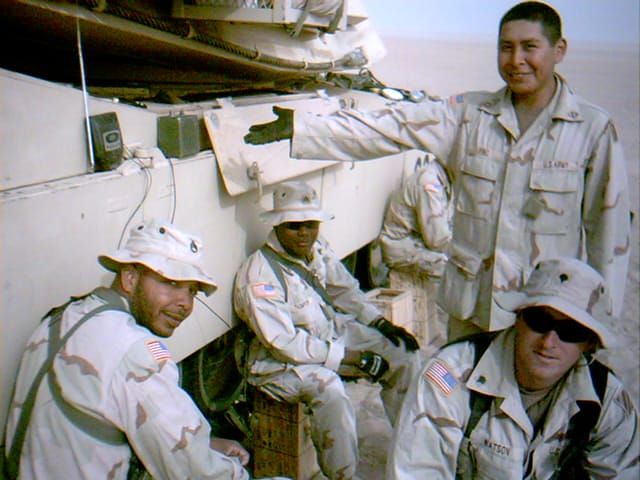
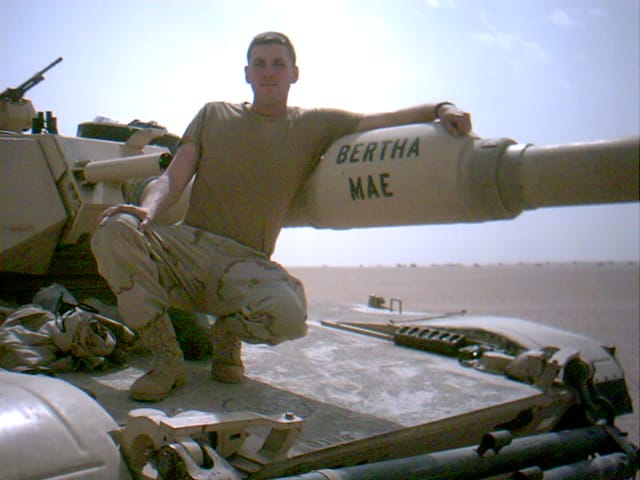
I love this picture. I also know what it cost.
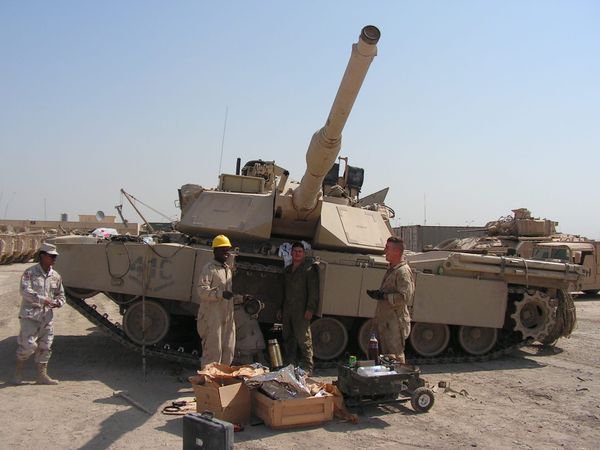
A photo can be a doorway. I can see it again—those brief pauses on the road into Baghdad, the engine heat, the dust, the tight discipline of a crew that had learned to read each other without speaking. We got a short-wave radio working, and in those small windows of reception we pulled in fragments of a larger world. More information. More confirmation. Enough to remind us that history doesn’t arrive all at once; it gathers speed, then it’s on you. Then, we were on the path to war.
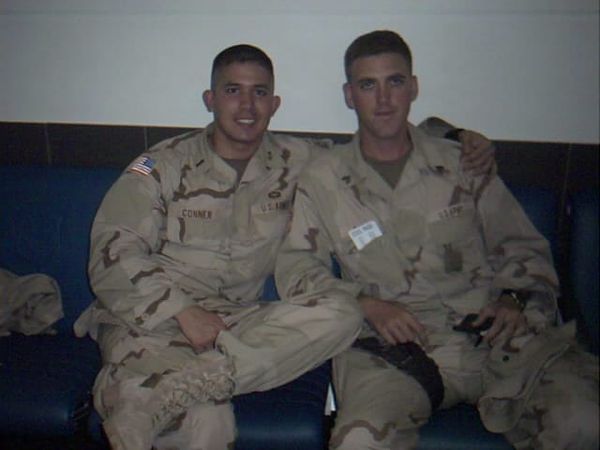
Now, the war is behind us in calendar years, but it still moves through our lives in quieter ways. Watson is building his wine and beer business. Ty is fishing or with his family. We buried Derrick almost two years ago. Pino just retired. The details are ordinary on the surface, but that’s what makes them sacred: men who once lived on adrenaline and orders now living on purpose, routines, and the slow work of staying human.
Every year, around the day we crossed the border, I reach out. For about three-four weeks I make sure that if they call, I can answer. I tell people plainly: during that time, they are my priority. Not because I’m stuck in the past, but because I remember what those weeks represented—the pace of war, the compression of life, the way an entire regime can fall faster than a man can process what he’s seeing. If that window was long enough to topple a government, it’s long enough for me to guard space for the people who carried it with me.
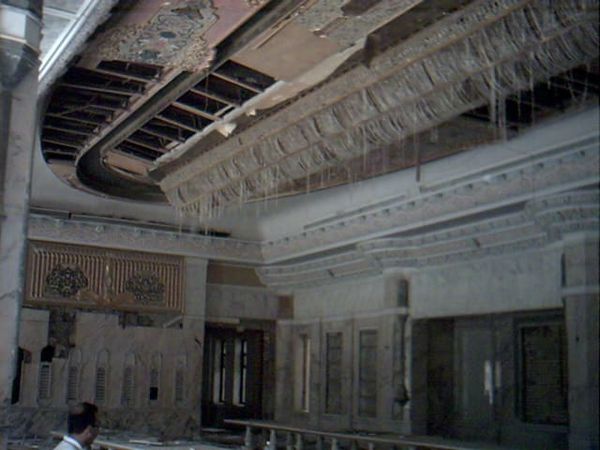
My Catholic faith was cemented in a driver’s hole of an M1A1 tank, at a place we called Moe, in downtown Baghdad, in 2003, in the middle of a firefight. Our chaplain was there with us—Baptist, I think. That moment didn’t turn faith into a slogan or a political badge. It turned faith into something more honest: not adherence to dogma, but a decision to remain anchored when everything in front of you is trying to unmake your soul. War has a way of stripping away the performance. What’s left is what you actually believe, and whether you can live inside it.
I’ve noticed that a lot of atheist talking points appeal to morality as something a society can engineer—systems designed, as Locke suggested, to draw out the natural good in people. Maybe that works sometimes. But I also forget, until I hear certain stories, that there are people who were raised with faith and belief but taught it was used as a prop, to control.
Sad really, faith should be about compassion. It should be a tool for comfort. How did I get that out of a
I understand that, more than I used to. I was raised in the ideological tug-of-war of divorced parents, treated less like a child and more like a prize. Not protected—processed. When your early life is shaped that way, you learn quickly that people can use anything—love, rules, religion, politics—as leverage. It becomes harder to trust language at all. You start listening for motives instead of meaning.
That’s part of why I watch the outrage economy the way I do now. The “news entertainment” industry sells moral panic because it pays. It thrives on turning people into symbols and pain into content. I’ve already lived through the phase where morality hardens into ideology, ideology becomes votes, votes become politicians, and politicians become armies—armies made of ordinary men who fight while the decision-makers stay clean. People like to say that in the time of kings, kings fought. Sometimes they did. Often they didn’t. The distance between power and consequence has always been a temptation.
I learned another kind of distance in Iraq—the kind that makes you sick. I watched Iraqi scavengers kill each other. Blood feuds and vendttas being settled in the open, women and children was the hardest for me. And our orders were clear: stop shooting anyone, or you will go to jail. We were told to watch. It taught me that morality isn’t just what you believe; it’s also what you’re permitted to do. And sometimes the system that claims to “bring out the good” in people is the same system that forces you to stand still while something terrible happens.
Conflict creates openings—minor, temporary changes that feel like movement. Real reform takes time. Discussion is slow. Planning is slow. Building something durable is slow. But slow is often what actually heals. The tragedy is that slow doesn’t make good television, and it doesn’t satisfy the part of us that wants a clean villain and a clean victory. Our country still hasn't dealt with the cost of the last war and it shows.
So yes, I mock the Hollywood elite when they preach from a life of privilege I can’t imagine—when they earn in a month what I’ll never see in my retirement. That mockery is partly humor and partly defense. But under it is something more grounded: a refusal to be manipulated into the same old cycle of rage that turns neighbors into enemies and citizens into ammunition. I can sit on the Gulf Coast and watch the privileged argue about tearing the country apart as if it’s a sport—and I can choose not to give them my spirit.
Because I’ve learned what rage costs when it becomes policy.
The older I get, the more I understand that my real loyalty isn’t to a party, a personality, or a broadcast. It’s to my Spartan brothers. To the ones still breathing. To the ones we buried. To the families who carried them home. To the quiet promises that don’t trend but still matter: answer the call, make room, stay steady, don’t let the world turn you into something you hate.
I love this picture. It brings up memories. And maybe that’s the point: memory isn’t only pain. Sometimes it’s the proof that we survived, that we changed, that we still know how to show up for each other—four weeks at a time, every year, like a small ritual of mercy in a world that keeps trying to make everything disposable.